UGC pays you to make short video ads for brands — no followers required. If you can hook a viewer in three seconds and light a face, you already have the job skills.
There is a quiet irony at the bottom of the creator economy: most people with serious video skills are trying to grow their own channels, while brands are paying strangers hundreds of dollars to make videos for them. UGC — user-generated content — is a market built for people who already know how to hook an audience, structure a script, and light a face, which is to say people with YouTube experience. You do not need subscribers, you do not need a niche, and you do not need to ever go viral. You need a portfolio, a rate card, and the ability to pitch. This guide covers the rates, the transferable skills, the portfolio, the outreach, and the usage-rights pricing that turns your YouTube habits into paid work.
Introduction
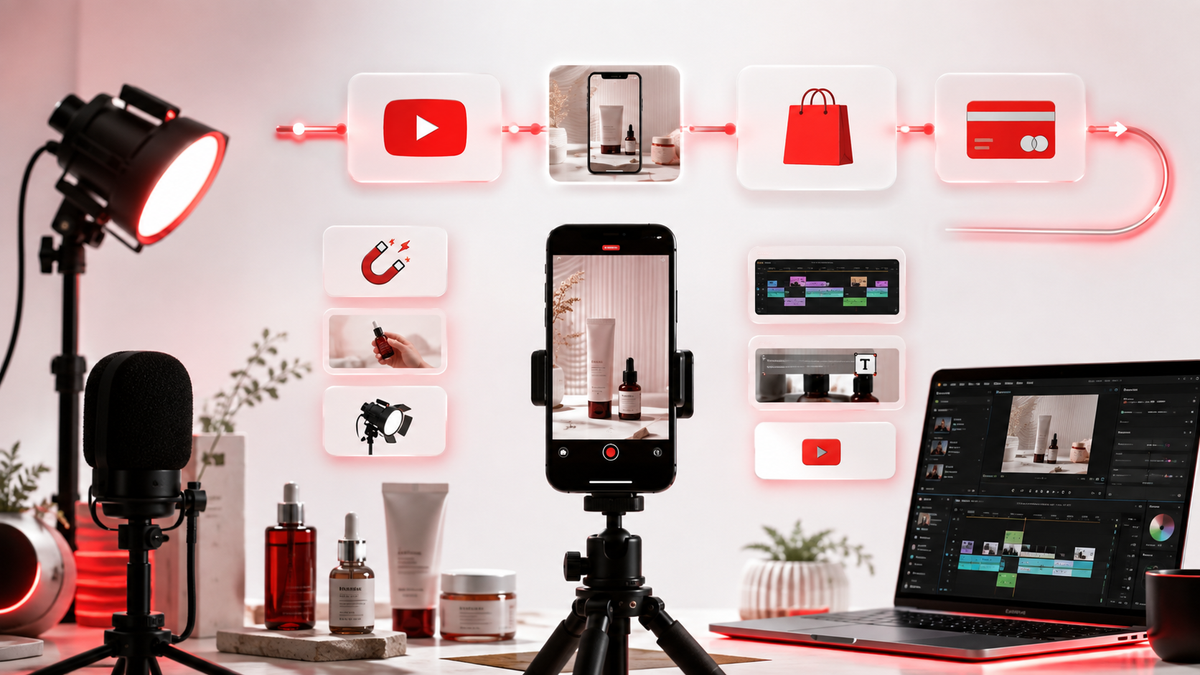
UGC is the term brands use for short, authentic-feeling video ads filmed by creators — usually on a phone, usually in the first person, usually with a script the brand provides or approves. Think of the 'I tried this and here is what happened' videos that appear in social feeds and ads. That is UGC, and brands buy it in volume because authentic creator footage outperforms glossy studio ads in paid placements. The market pays well: beginners typically earn $50 to $300 per video, intermediate creators $300 to $750, and experienced ones $750 to $2,000 or more. Full-time UGC income typically lands around $48,000 to $72,000 a year. And because you are paid for production skill rather than reach, your YouTube background is a genuine advantage from day one.
What UGC Work Actually Is
A UGC job usually arrives as a creative brief: the brand names the product, the audience, the goal, and the tone, and gives you a loose script or a list of talking points. You film the video with your phone or camera, edit it to the length requested, and deliver the file. The brand uses it in organic posts, paid ads, or both. Payment is per video, and the deliverables can include multiple clips per brief — an intro hook, a problem segment, a testimonial style segment, and a call to action. The job is closer to freelance production than to content creation. You are a hired gun executing a brief, not building an audience. That distinction matters, because it means your channel's performance is irrelevant to whether you get hired — and it means your craft skills, not your follower count, are what you sell. The brief is the contract, so learn to read it like one. Every brief names the deliverable count, the length, the tone, the usage terms, and the deadline, and the professionals quote from the brief, not from a general rate. If the brief asks for five clips, quote a bundle; if it asks for a hero clip plus a cutdown, quote both; if the usage terms are missing, ask before you film. The creators who get rehired are the ones who deliver exactly what the brief promised and raise a flag before filming when something is ambiguous — a five-minute clarification prevents a five-hundred-dollar do-over.
UGC Rates: What Brands Pay
The rate ladder in 2026 looks like this: beginners earn $50 to $300 per video, intermediate creators $300 to $750, and experienced creators with established client relationships $750 to $2,000 or more. A few things move you up the ladder faster than anything else:
- Delivering clips exactly to the brief and on deadline. Reliability is worth more than flair.
- Niches with budget. Beauty, health, and tech brands pay for quality footage; low-margin niches are tighter.
- Usage rights. The single biggest rate multiplier — see the usage-rights section below.
- Bundles. A brief that asks for five clips should be quoted as a bundle, not five single-video rates.
Set your starting rate around the middle of the beginner range and raise it every few clients as testimonials accumulate. Brands routinely accept a 20% to 30% bump once you have proof of reliability. Two rate-setting traps to avoid. The first is quoting per clip when the brief is a bundle — five clips at $150 each sounds reasonable until you realize the brand expected the five as one job; quote the bundle at a modest discount and your number looks sane. The second is pricing yourself out of a niche by not knowing its range; a brand that has paid $400 for a beauty clip will not pay $800 for yours just because you asked. Know the range you are in, price at the upper-middle of it, and let usage rights do the heavy lifting on total value.
How Your YouTube Skills Transfer
The uncomfortable truth of most beginner UGC pitches is that they are full of people who have never edited a video. Your YouTube history puts you ahead of the entire entry-level pool, and the specific skills map directly:
- Hooks: you already know how to open in the first three seconds, which is the entire game in a short-form ad.
- Script structure: you can write a problem-to-solution arc, which is what a creative brief is asking for.
- Editing: you know pacing, cuts, music, and captions, all of which separate usable UGC from amateur footage.
- Lighting and framing: your face looks professional because you set it up like one.
- Storytelling instinct: you can make a boring product feel like a result.
Present these in your pitch explicitly. Do not say 'I love making videos.' Say 'I cut weekly videos for my channel, which means I can turn your brief into a finished ad with pacing, captions, and a hook in 48 hours.' There is also a skill you may not realize you have: knowing what good looks like. Years of watching YouTube have built your taste — you can tell in ten seconds whether a video is professionally cut, whether a hook lands, and whether an ad feels authentic. Brands are paying for that judgment as much as for the footage, and it shows in the decisions you make unprompted: the cut you trim, the caption you time, the pause you leave before the product shot. Mention the judgment, not just the buttons you can push.
Building a Three-Video Portfolio
You do not need twenty samples; you need three that prove the specific skills brands are buying. A strong starter portfolio covers three angles:
- The testimonial: you, holding the product, talking about the result in the first person. Shows natural delivery and trust.
- The problem-to-solution: open on a problem, introduce the product as the fix. Shows scripting and structure.
- The aesthetic demo: a brand-consistent short with music, captions, and clean edits. Shows production polish.
Make them in niches you actually use — if you genuinely use the products, the authenticity shows and the samples double as spec work you can send to those brands first. Keep each under 30 seconds, caption them, and host them on a simple one-page link: your samples page, a drive folder, or a lightweight portfolio site.
Outreach Templates That Get Replies
UGC outreach is a numbers game with a personalization floor. The winning pattern is short, specific, and sample-first: Subject: UGC creator for [Brand] in your niche Hi [Name], I make short video ads for products I genuinely use — [one line about your YouTube background]. I built a sample for a brand like yours; the video is 25 seconds, and you can watch it here: [link]. I am taking on [number] new clients this month and quoting [rate range] per video with full usage rights. If you are launching anything soon, I would love to make a spec clip for you. [Your name, portfolio link] The three rules: attach or link a sample (never pitch without one), keep it under 120 words, and personalize the first line so it reads like it was written for that brand. Send ten a day, track replies, and follow up once after a week. The brands that reply become your repeat clients, which is where the real income lives. A portfolio link that opens to a gallery of ten clips with a headline of the niche each serves will out-convert a link to a single video file every time. Structure the samples page so a brand lands on the clip most like the job they are hiring for — if you are pitching a skincare brand, the first thing they see should be your skincare-style sample, not your gaming video. One page, niche-labelled sections, under thirty seconds per clip, and it becomes a tool you reuse for every pitch without writing a new email from scratch.
Pricing Usage Rights
The rate you quote for the video itself usually covers basic usage. The multiplier comes when the brand wants more, and this is the part most new UGC creators give away for free by accident. Standard practice: basic or organic usage is included, paid advertising rights add 20% to 100%, and whitelisting — letting the brand run the video through your account — adds 50% to 150%. A $200 video with ad usage and whitelisting can legitimately become $500 or more. State usage terms in every quote before filming, because retroactively renegotiating usage is nearly impossible. A simple line in your quote: 'This rate covers organic usage. Paid advertising rights are +40%, whitelisting is +75%.' Predictable, transparent, and it protects the value you just created.
Why Followers Don't Matter
The defining fact of UGC is that reach is irrelevant to the transaction. Brands buy the video, not the audience behind it, and they place it through their own channels and paid ads. A creator with 100 subscribers who delivers a clean, authentic 25-second ad is worth the same as a creator with 100,000 who delivers the same file — often more, because the small creator charges less for the same craft. This is why UGC is the most democratic income stream in the creator economy, and why your YouTube skills — not your channel size — are the entire competitive advantage. Lead with the craft, price the usage, and let the clients compound. One honest caveat to the no-followers story: some brands still ask for creator handles with large followings because they want organic reach alongside the content. That is a minority of briefs, and the workaround is simple — your rate card can include an optional organic-post add-on when the brand wants the footage posted to your own accounts. The video's production value stays the core product, and the reach becomes a separate, priced line instead of an assumption. That keeps you competitive on the content while never giving the reach away for free.
Final Takeaway
UGC is the fastest paid entry into the creator economy for people who already know how to make video, and your YouTube skills are the entire advantage. Build three portfolio clips, set a rate in the $50 to $300 beginner band, and learn to price usage rights so your work compounds instead of giving itself away. Then pitch ten a day with a sample and let the niche, the reliability, and the follow-up do the rest. Followers never matter; craft does.
Frequently Asked Questions
How much do UGC creators get paid?
Beginners typically earn $50 to $300 per video, intermediate creators $300 to $750, and experienced creators $750 to $2,000 or more. Full-time UGC income typically lands around $48,000 to $72,000 a year.
Do I need followers to become a UGC creator?
No. Brands buy the video, not the audience, and place it through their own channels and paid ads. You are paid for production skill and authenticity.
What is UGC content?
Short, authentic-feeling video ads filmed by creators — usually on a phone, in the first person, following a brand creative brief — used in organic posts and paid placements.
How do I start UGC with no experience?
Build a three-video portfolio in niches you actually use, set a beginner rate, and send personalized pitches with a sample attached to relevant brands.
What are usage rights in UGC?
The terms of how the brand can use your video. Organic usage is usually included, paid advertising adds 20% to 100%, and whitelisting adds 50% to 150%.
How do I find UGC clients?
Send roughly ten personalized pitches a day with a sample link, follow up once after a week, and convert replying brands into repeat clients.
How do YouTube skills help with UGC?
Hooks, script structure, editing, lighting, and storytelling transfer directly — they are exactly the production skills brands are buying in a brief.
Can I do UGC while growing my own channel?
Yes, and they reinforce each other. Your channel proves your editing skill, and UGC income funds your channel's time and gear.