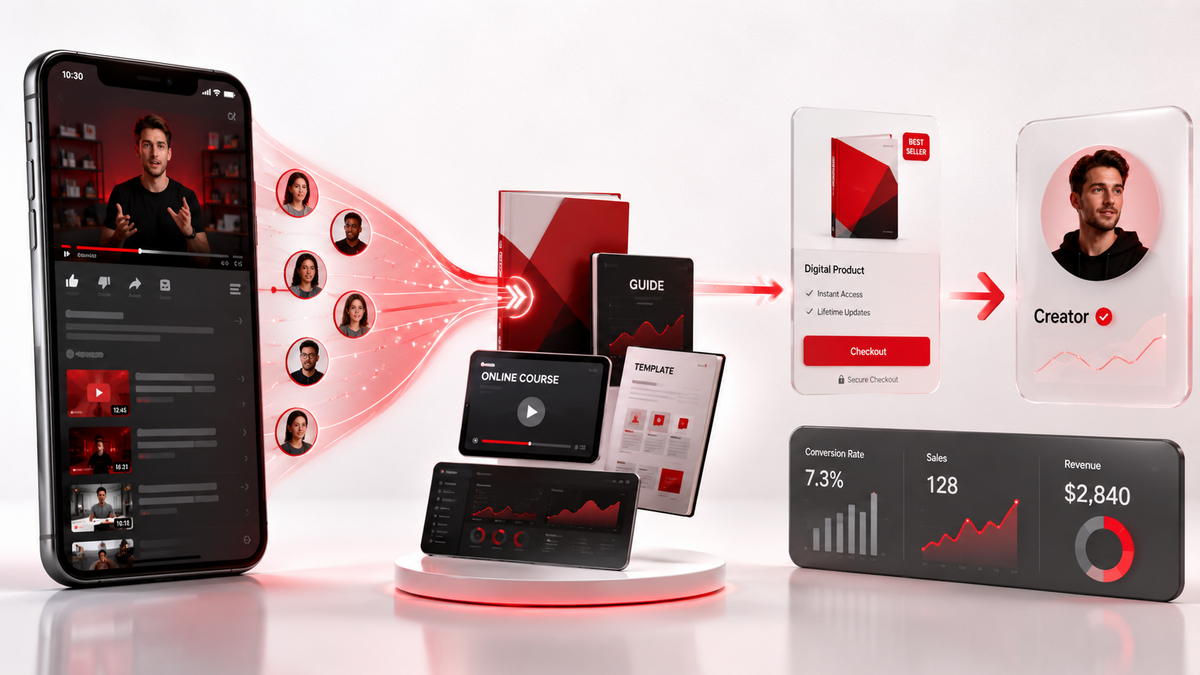
A small audience can absolutely sell digital products — conversion runs on trust and specificity, not scale. Here is what to sell, how to price it, and how to set a goal your views can actually support.
Here is a sentence you will not hear often on creator forums: a channel with 2,000 subscribers who all showed up for one narrow problem will outsell a broad channel with 200,000. Digital products run on trust and specificity, not raw reach. When someone subscribes to your channel, they are not just consuming content — they are telling you they would trust your recommendation on a related product. That trust, converted at even 1% to 3%, is a business. This guide covers what digital products actually sell on YouTube, how the platform becomes your trust layer, how to price, and how to set a revenue goal that your real view count can support.
Introduction
Digital products are the highest-margin thing you can sell on YouTube because you create once and sell many times. A template, preset pack, spreadsheet, guide, or course costs you nothing to reproduce, so every sale past the first is nearly pure margin. The strategy is simple in shape: publish videos that solve a specific problem, point the viewers who trust you toward a product that solves it faster, and repeat until the back catalog feeds sales on its own. The parts that trip people up are choosing the right product, pricing it honestly, and setting goals the math can actually support. This guide walks through each.
What Digital Products Actually Sell on YouTube
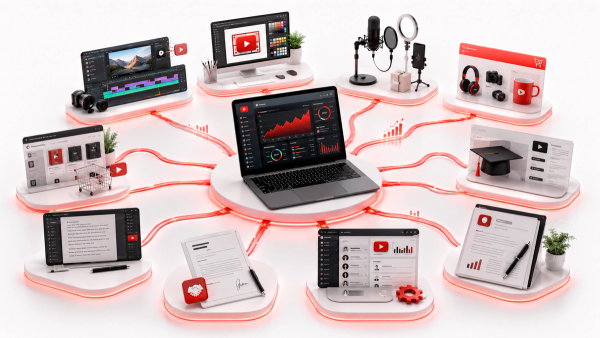
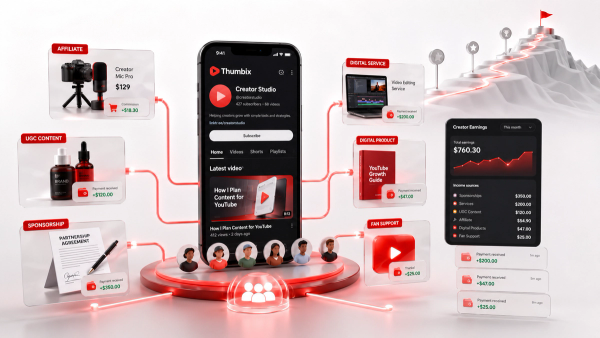
The products that sell best on YouTube share three traits: they solve a concrete problem, they save the buyer significant time, and they fit the viewer's context on your channel. The consistent winners:
- Templates and Notion setups: planners, trackers, content calendars, and workflow systems. Price ranges from $10 to $60.
- Presets: photo and video LUTs and Lightroom presets for photography channels. Typically $20 to $50.
- Spreadsheets and calculators: trackers for budgets, habits, or — fittingly — channel analytics. $15 to $50.
- Guides and ebooks: step-by-step instructions for a specific result. $10 to $40.
- Mini-courses and paid tutorials: deeper training on one skill. $50 to $300.
- Community or template bundles: the natural upsell once anything above starts selling.
Do not start with a giant flagship course. Start with a small, specific product that solves the exact problem your current videos already address. A $29 template that sells monthly is worth more to a small channel than a $300 course nobody buys. The fastest validation for any product idea costs one video and no build. Make the video that teaches the workflow your product shortcuts, then ask your viewers directly in the description and pinned comment which version they want — the free video, the one-page guide, or the full template pack. The responses tell you three things: whether the problem is real, what format the audience prefers, and roughly how many would pay. Build the option that wins. This is how small channels launch products with confidence instead of praying; the audience tells you what to build before you spend a week making it.
Using YouTube as a Trust Layer
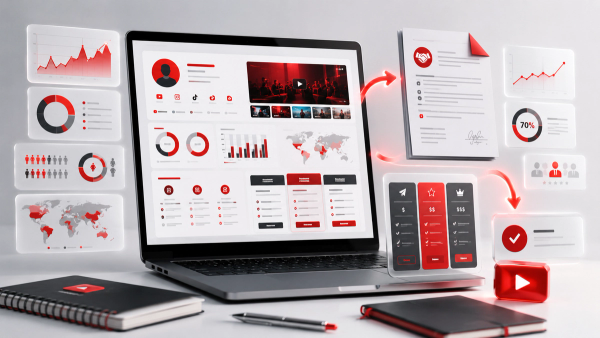
The reason YouTube beats a random landing page for product sales is that the video does the persuasion. A viewer watches you explain the problem, watches you solve it on camera, sees the result, and only then hears about the product that shortcuts the process. By that point you have earned attention and credibility in minutes — the same trust a sales page tries to manufacture with copy. The mechanics of the funnel: your video's job is not to sell hard. It is to deliver so much free value that the product feels like the obvious next step. Put the product link in the description, mention it at the natural payoff moment, and direct viewers to a simple landing page with one product, one price, and a short pitch. Collect emails on that page even if they do not buy — an email list turns every future launch into a guaranteed audience, and it is the single most underrated asset for small-channel sellers. The landing page is the part beginners rush, and it deserves the opposite. One product, one price, one sentence of the outcome, three bullet points of what is inside, a single button, and the testimonials you have so far. That is it. Every extra element — navigation, social links, multiple products — is a distraction that costs conversion. Collect the email even from people who do not buy by offering a one-page freebie version of the product, because an email list of people who were curious enough to leave an address is the warmest audience any future launch can have.
Pricing Your Product
Price to the outcome, not the hours you spent. A $99 guide that saves a beginner a month of trial and error is cheap; a $49 template that saves a client ten hours is a bargain. The psychology that works on YouTube: a product priced at roughly the cost of one saved hour of work feels almost free, while a product priced under $10 signals low value and attracts refund-seekers. A practical pricing ladder for a small channel: one $15 to $30 entry product (template or preset), one $40 to $80 mid product (bundle or guide), and one $100 to $300 flagship (mini-course) for when demand proves itself. Test the low tier first, gather testimonials, then launch upward. The margin math is the point: a $29 product selling 20 copies a month is $580 a month of nearly pure margin — more than many fully monetized channels earn from ads at the same audience size. One pricing trap worth naming: do not discount to buy sales. A discount trains your audience to wait for the next discount, and it signals that your price was fake. If a launch underperforms, change the offer before you change the number — add a bonus, bundle a second product, or improve the landing page. The product that sells at $29 with a strong bonus outsells the same product at $19 with none, and it leaves the price ladder intact for the next launch.
Setting a Revenue Goal From Your Audience Size
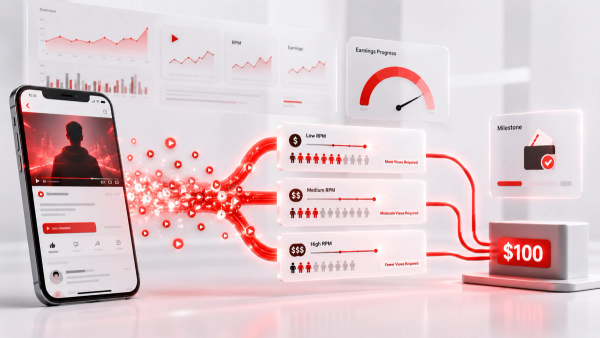
Here is the conversion math to plan with. Realistic sales conversion from viewers to buyers on a trust-based YouTube funnel is roughly 1% to 3% of your average video views per launch period, better for a highly specific product, worse for a broad one. So a channel averaging 5,000 views per video, converting at 1.5%, sees roughly 75 buyers per launch. At a $29 product, that is about $2,175 gross per launch. At a 2% rate and a $49 product, roughly $4,900. The Thumbix Revenue Goal Calculator does this arithmetic in reverse: you enter your target income, your average views per video, and a conversion assumption, and it tells you how many launches you need and at what price point to get there. The Thumbix YouTube Money Calculator is useful alongside it to compare a launch against the ad revenue those same views would earn — the comparison is almost always a surprise in the product's favor. Stress-test your conversion assumption before you commit to a goal. If your videos are tutorials in a narrow niche and the product is a template that matches exactly what you teach, a 2% to 3% assumption is defensible. If your channel is broad lifestyle content and the product is a course, assume 0.5% to 1% and plan accordingly. The honest assumption is the one you could defend to a skeptic, and it is better to be pleasantly surprised by a good month than confused by a bad one. Revisit the assumption every quarter as you collect real conversion data. A realistic first-year goal for a small channel: one $30 product, one launch per quarter, and a target of 20 to 60 sales per launch. That is $600 to $1,800 per quarter from a channel many would consider 'too small to monetize.'
Can a Small Audience Still Convert?
Yes — and the reasons are specific. A small audience is usually a qualified audience. If 2,000 people subscribed because you taught one narrow workflow, every one of them is a potential buyer of the matching product. A broad 200,000-subscriber channel has maybe 2% of viewers in the buying mood. That is the same pool of buyers, with far more noise. Small channels also convert better on trust because the relationship feels personal. When a viewer has watched twenty of your videos, your recommendation carries weight — the creator they know is asking for $29, not an ad asking for $29. Keep the product scoped to what your existing videos already teach, and the conversion rate climbs further. The bottleneck for small channels is not audience size; it is product specificity and the number of trust-building videos in the catalog. The other reason small channels convert is the search-triggered buyer. Most of your product sales will come from a viewer who found your video through search six months after you published it, watched the whole thing, and bought the product without ever subscribing. That buyer never shows up in your subscriber count, which is exactly why judging a digital product channel by subscribers is wrong. Build videos that rank for the problem your product solves, keep the links current, and the small-channel math quietly turns into a library business.
Product Launch Video Formats
Launch videos work best when they follow a familiar shape rather than a hard sell. Four formats that convert:
- The tutorial plus product reveal: teach the process, then show how your template or preset shortcuts it. The most natural format and the most reliable.
- The before and after: show the messy version of the workflow, then the product version. Perfect for presets, templates, and calculators.
- The case study: apply your own product to a real project on camera and show the result. Ideal for courses and guides.
- The FAQ or objection-handling video: answer the top ten questions about your product. Good for launches, and it keeps ranking in search for months afterward.
Every launch should have one landing page, one clear call to action, and a deadline or limited count if you want urgency without dishonesty. Then reuse the launch video's content as Shorts to pull new viewers into the funnel. Shorts that tease the free value convert viewers to the long-form video, which converts them to the product. A launch needs a rhythm, not just a video. The pattern that works for small channels: a teaser Short three days before, the main launch video on day one, a follow-up video answering the first questions on day three, and one final Short in the following week pointing back to the offer. Keep the product page live permanently — launches seed it, but evergreen search traffic sells it all year. A quarterly launch plus an always-live product page is a complete digital product engine, and it survives months where you barely upload.
Final Takeaway
Selling digital products on YouTube is not a scale game; it is a trust and specificity game, and small channels have an unfair advantage at both. Pick one product that solves the exact problem your videos already teach, price it to the outcome, and convert your view count into a goal with the Revenue Goal Calculator before you build anything. Then launch, collect emails, and let the back catalog sell. Twenty sales of a $30 product beats ten thousand views of ad revenue on almost any small channel — and it is entirely within your control.
Frequently Asked Questions
Can a small YouTube channel sell digital products?
Yes. Conversion runs on trust and specificity, and a 2,000-subscriber niche channel can convert 1% to 3% of views into buyers — often as many as a far larger broad channel.
What digital products sell best on YouTube?
Templates, presets, spreadsheets, guides, and mini-courses that solve a specific problem your existing videos already cover. Start with a small scoped product, not a flagship course.
How do I price a digital product?
Price to the outcome it delivers, not the hours you spent. A common small-channel ladder is $15 to $30 entry, $40 to $80 mid, and $100 to $300 flagship once demand proves itself.
How many sales can I expect from one launch?
At a realistic 1% to 3% conversion, a 5,000-view video produces roughly 50 to 150 buyers per launch period — around $1,000 to $4,000 gross depending on price.
How do I set a revenue goal from my views?
Multiply average video views by a 1% to 3% conversion assumption, then by price. The Thumbix Revenue Goal Calculator does this in reverse from a target income.
Do I need an email list to sell digital products?
Not to start, but it is the highest-leverage asset. Collect emails on your landing page so every future launch starts with an interested audience.
What launch video format works first?
The tutorial plus product reveal: teach the process, then show how your template, preset, or guide shortcuts it. Before-and-after and case-study formats follow.
Is YouTube ad revenue better than digital products for a small channel?
Almost never. Twenty sales of a $30 product at nearly pure margin beats the ad revenue those same views generate on most small channels.