Table of Contents
- Introduction
- Why This Topic Matters
- Quick Answer
- Who This Guide Is For
- Step-by-Step Instructions
- Beginner Guide
- Advanced Tips
- Desktop Instructions
- Mobile Instructions
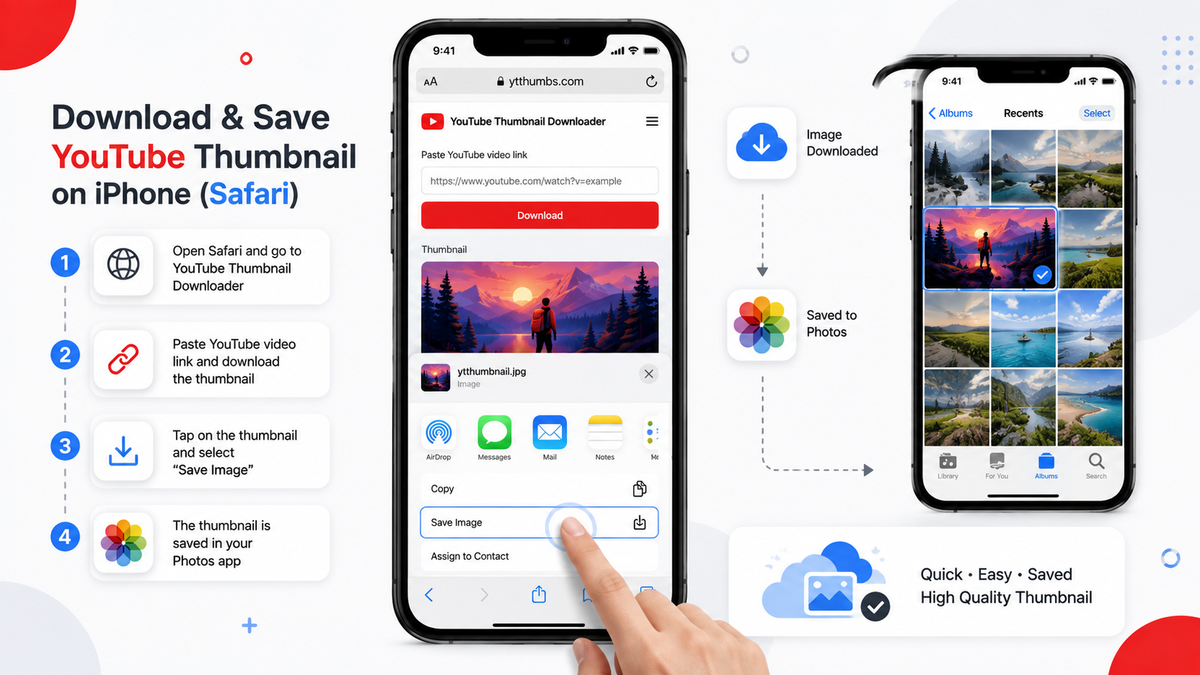
- iPhone Guide (Detailed)
- Examples
- Common Mistakes
- Best Practices
- Pro Tips
- Creator Tips
- SEO Tips
- Marketing Tips
- Frequently Overlooked Facts
- Myths vs Facts
- Troubleshooting
- Summary
- Final Thoughts
- Call to Action
- FAQs
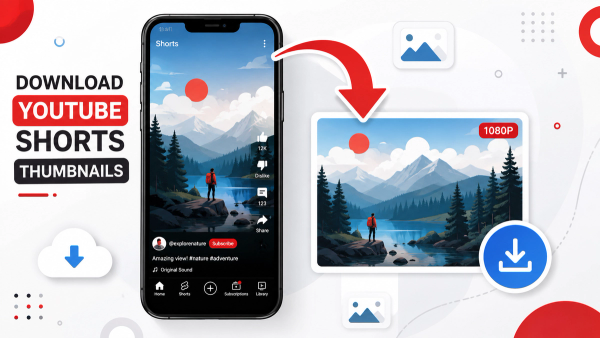
iOS doesn't give you an obvious way to save a YouTube thumbnail, and the YouTube app itself won't let you download one at all. Here's the exact Safari-based method that works every time.
Introduction
If you've ever tried to save a YouTube thumbnail directly from your iPhone, you've probably noticed the YouTube app gives you no way to do it. There's no download button, and long-pressing a thumbnail in the app just opens the video. The good news is that Safari, combined with a simple free tool, makes this a 30-second task — you just need to know the right steps.
Why This Topic Matters
More creators than ever manage their entire workflow from a phone — reviewing thumbnails, doing quick competitor research, or saving reference images while on the go. Not being able to save a thumbnail directly from the YouTube app is a real friction point, and knowing the Safari workaround saves a surprising amount of time.
Quick Answer
Copy the video's link from the YouTube app, open the Thumbix Thumbnail Downloader in Safari, paste the link, then touch and hold the thumbnail image that appears and tap Save to Photos. No app installation required.
Who This Guide Is For
- iPhone users who want a fast, no-app way to save thumbnails
- Creators who do research and planning on mobile
- Editors who need reference images while away from a desktop
- Anyone who has tried and failed to save a thumbnail directly from the YouTube app
Step-by-Step Instructions
- Open the YouTube app and find the video.
- Tap Share, then Copy Link.
- Open Safari (this method only works reliably in Safari, not the in-app browser).
- Go to the Thumbix Thumbnail Downloader.
- Paste the link into the input field and tap the search button.
- Touch and hold the thumbnail image that appears.
- Tap Save to Photos (or Add to Photos, depending on your iOS version).
Beginner Guide
If this is your first time, the part people most often get wrong is trying to do this inside the YouTube app's built-in browser instead of Safari — that won't work. Always open the link in Safari specifically.
Advanced Tips
- If you use Shortcuts on iOS, you can build a simple automation that takes a copied YouTube link and opens it directly in the Thumbix tool for a one-tap workflow.
- Saved thumbnails go into your regular Camera Roll by default — consider creating a dedicated Photos album for thumbnail research so it doesn't mix with personal photos.
- iCloud Photos sync means anything you save on iPhone will also appear on your Mac or iPad automatically, which is handy if you plan to use the image later on a bigger screen.
Desktop Instructions
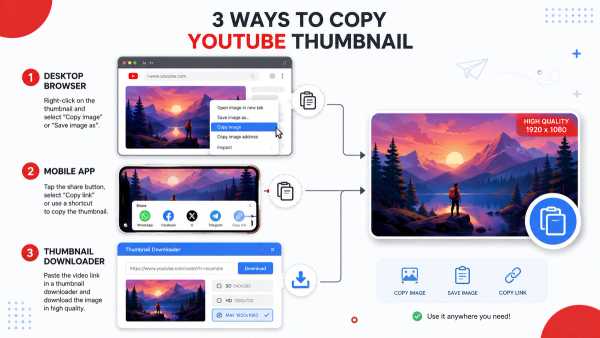
On a Mac or Windows desktop, the same Thumbix Thumbnail Downloader works with a simple right-click instead of touch-and-hold — paste the link, then right-click the image and choose Save Image As.
Mobile Instructions
On any mobile browser, the touch-and-hold gesture is what triggers the save/copy menu. This works the same way on Android using Chrome, though the exact wording of the menu options differs slightly.
iPhone Guide (Detailed)
- In the YouTube app, tap the Share icon below the video.
- Tap Copy Link from the share sheet.
- Close or switch out of the YouTube app and open Safari.
- Navigate to
thumbix.siteand go to the Thumbnail Downloader tool. - Tap the input field, then tap Paste.
- Tap the search/download button and wait for the thumbnail to load.
- Touch and hold the image until the context menu appears.
- Tap Save to Photos — you'll see a brief confirmation, and the image will appear in your Photos app under Recents.
Examples
- A creator scrolling YouTube on their commute saves three competitor thumbnails to review with their editor later that day.
- A student researching a video essay topic saves a handful of thumbnails on their iPhone to build a quick mood board before opening a laptop.
- A social media manager saves a client's thumbnail directly to Photos so they can immediately share it in a Slack thread from their phone.
Common Mistakes
- Using the YouTube app's in-app browser instead of Safari — the save option often doesn't appear correctly.
- Long-pressing the thumbnail inside the YouTube app itself — this only opens the video, since the app doesn't expose the image for saving.
- Confusing Save Image with Add to Reading List — make sure you tap the correct option in the context menu.
Best Practices
- Always use Safari, not a third-party browser or in-app webview, for the most consistent behavior.
- Check that Photos access permissions are enabled for Safari in iPhone Settings if the save option doesn't appear.
- Save at the highest resolution offered by the tool rather than a smaller preview size.
Pro Tips
- Combine this method with iOS's Shortcuts app to cut the process down to essentially one tap from the share sheet.
- Use Split View on iPad to keep the YouTube app and Safari open side by side, making it even faster to copy links and save images back to back.
Creator Tips
If you're doing thumbnail research primarily on your phone, get in the habit of saving straight into a dedicated album rather than sorting later — future you will thank present you when it's time to actually use those reference images.
SEO Tips
Mobile-first research habits matter because a growing share of YouTube's audience — and a growing share of creators managing their channels — operate primarily from a phone. Being able to do quick competitive thumbnail research without needing a laptop keeps your SEO and CTR research workflow moving even when you're away from a desk.
Marketing Tips
For social teams working across multiple apps, saving a thumbnail straight to the iPhone Photos app makes it instantly available to share in Slack, Notes, or a client deck without an extra export step.
Frequently Overlooked Facts
- The YouTube iOS app deliberately does not expose a save/download option for thumbnails, which is why the Safari workaround is necessary.
- iOS treats in-app browsers (like the one inside the YouTube app) differently from Safari for security reasons, which affects what save options appear.
- Photos saved this way retain their original resolution — iOS does not compress images saved through the standard Save to Photos action.
Myths vs Facts
- You need a third-party app to save YouTube thumbnails on iPhone: Safari plus a free web tool is all you need
- Long-pressing a thumbnail in the YouTube app saves it: It only opens the video — the app doesn't expose the image
- Saved images are automatically compressed by iOS: Standard Save to Photos preserves the original image quality
Troubleshooting
The Save to Photos option doesn't appear. Check that Safari has permission to access Photos under iPhone Settings > Safari, or Settings > Privacy > Photos. Pasting the link doesn't work. Make sure you copied the link using the Share sheet's Copy Link option, not just selected text manually. The image saves as a low-resolution preview. Select a higher resolution option in the tool if more than one size is available for that video.
Extended Walkthrough: Setting Up a Repeatable iPhone Workflow
If you find yourself saving YouTube thumbnails on your iPhone more than occasionally, it's worth spending a few minutes setting up a workflow that removes as much friction as possible. Start by creating a dedicated album in the Photos app — something like "Thumbnail Research" — so saved images don't get lost in your camera roll alongside personal photos. From there, every time you use the Safari method described above, manually move the saved image into that album, or set it as your default save location if your iOS version supports custom save destinations for Safari downloads. For creators who do this daily, building a Shortcuts automation is worth the ten minutes it takes to set up. A simple Shortcut can accept a shared YouTube link, open it directly in the Thumbix tool inside Safari, and even prompt you to save the resulting image — turning a five-step manual process into something closer to a single tap from the share sheet. This kind of small workflow investment pays for itself quickly if thumbnail research is a regular part of your content process.
Why Safari Specifically Matters
A detail that trips up a lot of iPhone users is assuming any browser-like surface will behave the same way. The YouTube app's built-in browser, third-party browsers with restricted permissions, and even Chrome for iOS (which under the hood still uses Apple's WebKit engine due to App Store rules) can behave slightly differently when it comes to exposing the long-press save menu for images. Safari has the most consistent, well-tested support for this interaction, which is why it's the recommended path rather than just "any browser." If you regularly use a different default browser, it's still worth switching to Safari specifically for this particular task.
Storage and Syncing Considerations
Because iCloud Photos syncs your camera roll (and any custom albums) across your Apple devices by default, a thumbnail saved on your iPhone will typically show up on your iPad or Mac within moments, assuming you're signed into the same iCloud account and have a working internet connection. This is genuinely convenient for creators who do thumbnail research on the go and later want to open those same images on a larger screen for detailed editing or comparison work, without needing to re-download or transfer anything manually.
Summary
Saving a YouTube thumbnail on iPhone isn't possible directly through the YouTube app, but it takes less than a minute using Safari and the free Thumbix Thumbnail Downloader — copy the link, paste it in, and touch-and-hold to save.
Final Thoughts
Once you've done this a couple of times, it becomes second nature. It's a small workflow fix, but for anyone doing creator research or content planning from their phone, it removes a genuinely annoying gap in what the YouTube app lets you do.
Call to Action
Save any YouTube thumbnail straight to your iPhone with the free Thumbix Thumbnail Downloader — no app to install, no watermark, works right in Safari.
Frequently Asked Questions
Why can't I save a YouTube thumbnail directly from the iPhone app?
The YouTube iOS app doesn't expose a save or download option for thumbnail images, so you need to use Safari with a tool like Thumbix instead.
Do I need to download an app to save a YouTube thumbnail on iPhone?
No. The Thumbix Thumbnail Downloader works entirely inside Safari — no app installation is required.
Why doesn't Save to Photos appear when I long-press the image?
This usually means Safari doesn't have Photos permission enabled, which can be fixed in iPhone Settings under Safari or Privacy settings.
Can I save a thumbnail from the YouTube app's built-in browser?
It's not reliable — the in-app browser handles image saving differently than Safari, so it's best to always open the link in Safari.
Will the saved thumbnail be full resolution on iPhone?
Yes, as long as you select the highest resolution option available in the tool before saving; iOS does not compress images saved via Save to Photos.
Can I save a thumbnail to Files instead of Photos on iPhone?
Yes — the long-press menu also typically offers a Save to Files option alongside Save to Photos.
Does this method work on iPad too?
Yes, the same Safari-based steps work identically on iPad.
Is there a faster way to do this repeatedly?
Yes — setting up an iOS Shortcut that opens a copied link directly in the Thumbix tool can reduce the process to a couple of taps.
Can I copy the thumbnail instead of saving it to Photos?
Yes, the same long-press menu offers a Copy option, which lets you paste the image directly into another app like Notes or Messages.
Is saving a YouTube thumbnail on iPhone legal?
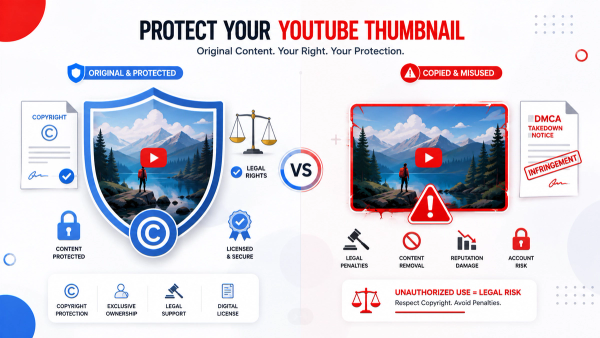
Saving a publicly visible thumbnail for personal reference is generally fine; reusing it commercially without permission can raise copyright issues.