Table of Contents
- Introduction
- What YPP Actually Is in 2026
- The Honest Math for a Small Channel
- What YPP Gives You Beyond Ads
- The Real Costs of Joining
- The $100 Payout Threshold Problem
- Fan Funding: The Hidden Upside
- How the Early-Access Tier Helps Small Channels
- Alternatives to YPP for Small Creators
- When YPP Is (and Isn't) Worth It
- How to Get Approved Faster
- Use the Thumbix Revenue Tools
- Frequently Asked Questions
- A Simple Decision Framework for YPP
- Common Mistakes Creators Make With YPP
- A Realistic First-Year Scenario
- Conclusion
For small channels, YPP won't make you rich — but ad revenue is only part of what it unlocks. Here's what joining actually costs, what you get, and when it's worth it.
Introduction
Ask five creators whether the YouTube Partner Program (YPP) is worth it for a small channel and you'll get five different answers. Some will call the ad checks insulting. Others will say monetization changed everything — and not because of the ads. The truth is more interesting than either extreme. If your only goal is ad revenue, YPP at small scale produces a modest check. But YPP is no longer just an ad program. In 2026 it's the doorway to memberships, Super Thanks, revenue from YouTube Premium watch time, and a set of benefits that matter at any size. Whether it's worth it depends on which parts you actually use.
What YPP Actually Is in 2026
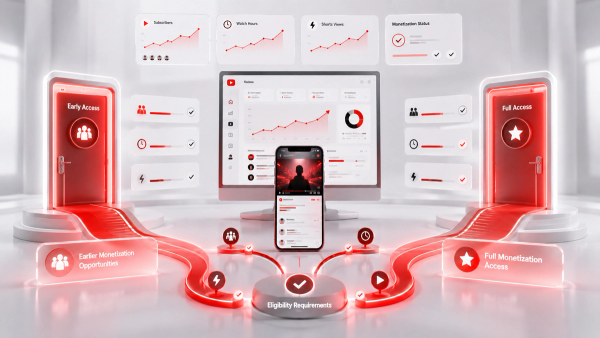
The YouTube Partner Program is the program that lets creators earn from their content. Since 2023, YouTube has used a tiered system that makes the entry point much lower than the classic requirement:
- Early access (fan funding tier): 500 subscribers, 3 public uploads in the last 90 days, and 3,000 public watch hours in the last 12 months or 3 million public Shorts views in the last 90 days. This unlocks memberships, Supers, and YouTube Shopping — but not ad revenue.
- Full monetization tier: 1,000 subscribers plus either 4,000 public watch hours in the last 12 months or 10 million public Shorts views in the last 90 days. This adds ads and Premium revenue.
If your question is "is YPP worth it for small channels," the answer begins with understanding that the full tier isn't the only tier anymore. You can be in the program well before you hit 1,000 subscribers.
The Honest Math for a Small Channel
Let's be direct about the money. A small monetized channel — say 2,000 subscribers pulling 5,000 to 10,000 views a month — at a $4 RPM earns about $20 to $40 a month in ad revenue. A 500-view Short does almost nothing: at typical Shorts RPM, it's cents. Against that, the cost of your editing software, uploads, and the hours you spend can look brutal. That's the part nobody should sugarcoat. Ad revenue on a small channel will not replace a job, fund a hobby, or impress anyone. If YPP's only value was the ad check, it would be hard to call it worth it for most small channels. So let's look at everything else it unlocks.
What YPP Gives You Beyond Ads
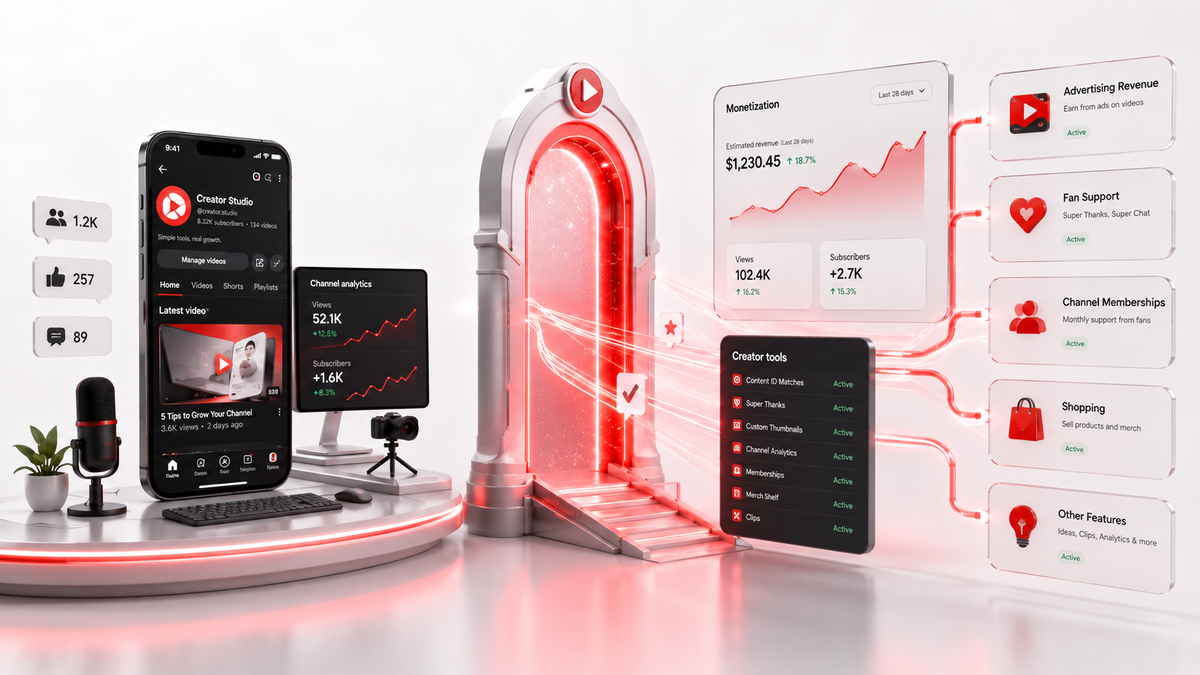
Monetization status is a switch that flips on several different revenue and trust benefits:
- Memberships — fans pay a monthly fee for badges, perks, and exclusive content. Even 50 members at $2.99 a month is $150 of reliable recurring revenue, often several times your ad check.
- Super Thanks, Super Chat, and Super Stickers — direct one-off payments from viewers on uploads and streams.
- YouTube Premium revenue — a share of the subscription fee for Premium members who watch your content. This is often a pleasant surprise for channels with strong watch time.
- YouTube Shopping — affiliate-style product tagging where available.
- A credibility signal — a monetized channel reads as more established to brands, sponsors, and collaborators.
For many small creators, memberships and Supers end up meaning more than ads. The fan funding tier exists specifically to let small channels start building that recurring revenue early.
The Real Costs of Joining
YPP is free to apply for and has no fees. The costs are indirect:
- Ad experience. Ads play on your content, which some creators feel clashes with their brand or frustrates viewers. It's your call, and mid-roll placement is fully in your control.
- Time. You'll need to meet requirements, apply, go through review, and set up AdSense. That's real hours on top of content creation.
- The payout wait. AdSense only pays once your balance passes $100, and payouts follow a schedule with a 21-day hold. For a small channel, it can take months between "approved" and "first check."
None of these are dealbreakers, but they're the true cost of admission, and it's fair to weigh them.
The $100 Payout Threshold Problem
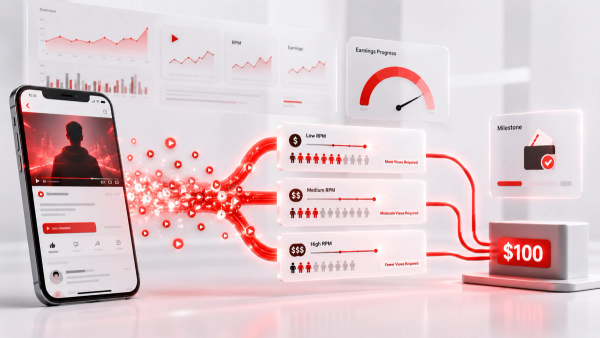
Here's the most practical frustration of small-channel monetization: the $100 AdSense payout threshold. If you earn $30 a month, your balance takes over three months to reach payout, and if you stop earning, you may never get there. It's not a scam — it's a threshold that keeps Google's payment costs sane — but it does mean small channels often carry a growing balance for a while. The counterpoint: memberships and Supers post to the same balance. One member's $4.99 monthly membership is often worth more than all the ads on a typical small video, and it helps you cross the threshold faster.
Fan Funding: The Hidden Upside
The fan funding tier is the best argument for joining early. You can hit 500 subscribers and 3,000 watch hours while your channel is still young, enable memberships and Supers, and start earning from your community months before you're eligible for ads. By the time you reach the full tier, you may already have a small base of recurring members — which most creators agree beats ad cents. It also changes the incentive structure. Instead of chasing views for a few dollars, you focus on the audience willing to pay to support you. That's a healthier relationship with your content at small scale.
How the Early-Access Tier Helps Small Channels
Practically, the early tier:
- Gives you revenue before 1,000 subscribers
- Lets you test memberships and Supers early
- Gets you familiar with the monetization dashboard and approval process
- Builds a track record that speeds up full-tier approval later
For a channel on the way up, joining early isn't a distraction — it's onboarding for the part of your creator journey where money actually matters.
Alternatives to YPP for Small Creators
You don't have to wait for YPP to earn, and you don't have to join it to build income:
- Sponsorships — a single brand deal can pay more than months of ads, and small engaged channels attract niche sponsors.
- Affiliate marketing — recommend tools and products; you earn commission on every sale through your link.
- Digital products — a $15 template or preset you sell to 20 viewers is $300, no payout threshold.
- Patreon or Ko-fi — membership-style income before you qualify for YouTube memberships.
- Your own website — ads or products there aren't subject to YouTube's rules or thresholds.
For creators with an audience that already trusts them, these often outperform YPP at small scale. That's not an argument against joining — it's a reminder that YPP is one income stream among several.
When YPP Is (and Isn't) Worth It
Joining is clearly worth it when:
- You're already close to or past the thresholds
- You have engaged fans who might buy memberships or send Supers
- You want brand credibility and the Premium revenue stream
- You plan to keep uploading long-term and the balance will eventually pay out
It's less compelling when:
- Your only goal is the ad check and you'd earn under $100 in your first year
- You despise ads on your content and can't stomach placements
- You have no community to convert into members
- You're a brand-focused channel where ads clash with sponsors
Notice the pattern: YPP is worth it as a long-term platform to build on, not as a short-term cash machine.
How to Get Approved Faster
- Hit the thresholds with public watch hours — private and unlisted views don't count
- Ensure your channel follows the Community Guidelines and has no active strikes
- Publish original content you own; avoid reused or third-party material
- Turn on 2-Step Verification on your Google account before applying
- Link a valid AdSense account early so there's no setup delay
- Be patient — review typically takes about a month, sometimes more
Use the Thumbix Revenue Tools
Before you decide, put numbers on it. The Thumbix YouTube Money Calculator shows what your current views would earn at your likely RPM. The RPM Calculator confirms your rate from past earnings. And if the ad math looks thin, the Revenue Goal Calculator flips it around: it tells you how many views you'd need to hit a target income — the number that tells you whether small-channel ads are worth your time.
A Simple Decision Framework for YPP
When you're on the fence, work through three questions:
- Am I close to the threshold? Within 20% of the subscriber or watch-hour numbers? The remaining climb is usually short enough to make joining worthwhile.
- Do I have fans who would pay? If viewers already comment, request content, or ask how to support you, memberships and Supers have real potential.
- Am I planning to keep uploading for at least six months? If yes, the $100 payout threshold is a matter of time, not luck.
Two "yes" answers, and the program's upside beats its cost. The only creator who clearly shouldn't join is the one chasing a short-term check with no community and no intention to keep going.
Common Mistakes Creators Make With YPP
- Quitting before the first payout. The $100 threshold takes months for many small channels; giving up in month two forfeits real accrued revenue.
- Turning on every ad placement blindly. Stacked automatic mid-rolls can tank retention, which lowers your future earnings.
- Expecting ads to be the main income. Memberships, Supers, sponsors, and products will almost always matter more at small scale.
- Joining for the badge instead of the features. The value is in enabling memberships and Premium revenue, not in the monetized icon.
- Ignoring the audience-geography story. A small but US-heavy audience can out-earn a large one in lower-CPM markets — check where your views actually come from.
Avoid these, and the program does exactly what it's supposed to: it converts an audience that already exists into income.
A Realistic First-Year Scenario
Run the numbers on a typical small channel. 1,200 subscribers, 8,000 views a month, a $5 long-form RPM: about $40 a month in ads. Add 30 members at $2.99: $90 a month. A handful of Super Thanks and a couple of sponsor videos: maybe another $80 a month on average. That's roughly $2,500 for the first year — small, but real, and growing with the channel. Without YPP, the same channel earns zero from those sources. That's the honest case for joining: not a paycheck that replaces anything, but a foundation that builds as you do.
Conclusion
Is YPP worth it for small channels? Yes — if you treat it as the starting line rather than the prize. The ad checks alone won't justify it for most small creators. But the fan funding tier, memberships, Super Thanks, Premium revenue, and the credibility that come with monetization status are a real foundation you can build on. Join when you qualify, enable every revenue feature you're allowed, and treat the ad check as the baseline it is — then build memberships and outside income on top. Want the honest numbers first? Run your channel through the Thumbix YouTube Money Calculator and see what your views would actually earn before you apply.
Frequently Asked Questions
Is the YouTube Partner Program worth it for small channels?
As an ad program alone, often not immediately — small channels earn modest checks and face the $100 payout threshold. But YPP also unlocks memberships, Super Thanks, and Premium revenue, which usually makes it worth joining as soon as you qualify.
What are the YPP requirements in 2026?
Full tier: 1,000 subscribers plus 4,000 watch hours in 12 months or 10M Shorts views in 90 days. Fan funding tier: 500 subscribers, 3 uploads in 90 days, plus 3,000 watch hours or 3M Shorts views.
How much money can a small channel make from YPP?
Often $20–$60 per month in ad revenue at 5,000–10,000 monthly views with a $4–$6 RPM, plus whatever memberships and Supers add.
What is the $100 payout threshold?
AdSense only pays out once your balance reaches $100. Memberships and Supers add to the same balance, helping small channels cross it faster.
Should small channels monetize or chase sponsors instead?
Both. Sponsors often pay more per video, while YPP provides passive baseline revenue, Premium income, and brand credibility.
How long does YPP approval take?
Typically about a month after you meet the requirements and submit your application.